A podcast on the Arctic and Antarctica that applies the lens of geopolitics to analyze a wide range of critical issues pertaining to the polar regions and international affairs. In interviews with leading experts, recurring topics include Greenland, the Arctic Council, climate change, critical raw materials, the Antarctic Treaty System, hybrid warfare, science diplomacy, great power competition between the United States, China and Russia, sustainable development, Svalbard, NATO, Arctic shipping, Alaska, AI, technology and critical infrastructure, the Baltic Sea, military and national security, energy, the role of indigenous peoples in Arctic governance, and more. Polar Geopolitics is hosted by Dr. Eric Paglia, a podcast producer and environmental historian at KTH Royal Institute of Technology in Stockholm, Sweden.
Episodes
Dec 10, 2019
Dec 10, 2019
20 min
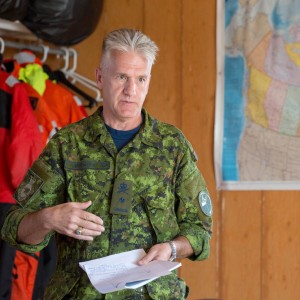
Responsible for all Canadian Armed Forces activity across the vast arc of northern Canada, Joint Task Force North plays a crucial role in safeguarding the North American Arctic. Polar Geopolitics is honored to welcome Brigadier General Patrick Carpentier, Commander of JTFN, for episode 20 of the podcast. BGen Carpentier discusses the main missions of JTFN and the array of challenges Canadian forces face in providing military security, engaging in crisis management and ensuring civilian safety in the Arctic at a time of significant environmental and geopolitical change, as well as increasing human activity in the Far North. He also explains the key contribution of the Canadian Rangers in securing the remote reaches of Canada’s Arctic territories.
Nov 21, 2019
Nov 21, 2019
30 min
Fresh off the 38thmeeting of CCAMLR that once again failed to achieve consensus on additional marine protected areas, the ATS might be seen as showing signs of stress amid escalating great power competition. Associate Prof. Jeffrey McGee, an expert on international law and Antarctica at the University of Tasmania, however, makes the case that the ATS is a resilient regime that 60 years after its signing remains a shining light of global governance for the area south of 60° South. On this episode, Dr. McGee applies his international legal perspective in discussing current Antarctic geopolitics, Australia’s ‘bifocal’ outlook on its neighbor to the south, and how the ATS interacts with other governance regimes at the global level. He also puts in context the CCAMLR 38 meeting that recently took place in his hometown of Hobart.

Oct 18, 2019
Oct 18, 2019
23 min
Is the Antarctic Treaty System obsolete, and could it collapse in the near future? Dr. Elizabeth Buchanan of the Australian National University explains why she is concerned that the increasing great power interest and Antarctic activity—ostensibly in the name of science—could jeopardize the almost 60-year-old ATS, and even lead to conflict if the Treaty is not updated to reflect current geopolitical realities. She also discusses Australia’s precarious situation as the state with the largest Antarctic claim (frozen under the ATS), which includes the ‘Dome A’ area where China has recently applied to create a Specially Managed Area around its Kunlun Station located there at the strategic highest point of the continent.
Sep 30, 2019
Sep 30, 2019
26 min
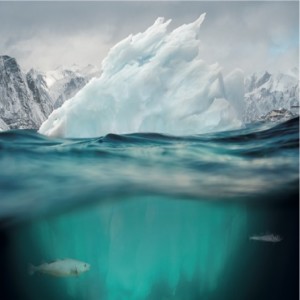
Environmental change in the frozen parts of the planet—the Cryosphere—have implications well beyond the polar regions and motivate much of the increased international interest in the Arctic and Antarctic. To better understand this key driver of scientific research, climate activism and geopolitical calculation, this episode of the podcast takes a deep dive into the just-released landmark IPCC Special Report on the Ocean and Cryosphere in a Changing Climate with Martin Sommerkorn, the coordinating lead author of the polar regions chapter of SROCC.
Aug 23, 2019
Aug 23, 2019
32 min
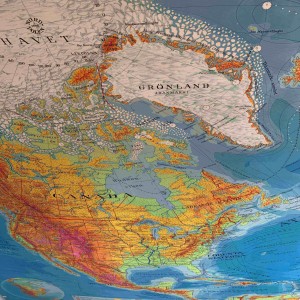
In the midst of an escalating diplomatic crisis between the United States and Denmark, international relations expert Prof. Paul Musgrave joins the Polar Geopolitics podcast to provide analysis, insight and an array of perspectives—American, global, historical—on Donald Trump’s interest in buying Greenland, an unfolding story that has sent shockwaves far beyond the Arctic.
Aug 21, 2019
Aug 21, 2019
38 min
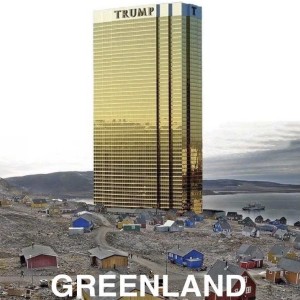
Reports of Donald Trump's interest in the U.S. buying Greenland from Denmark - without doubt the most unexpected and outrageous Arctic news story in recent memory - has attracted ridicule and rapidly morphed into a diplomatic crisis. Associate Professor Jon Rahbek-Clemmensen, an expert on Denmark-Greenland-U.S. relations at the Royal Danish Defense College, joins Polar Geopolitics for an analysis of Trump's Greenland gambit and its wide-ranging ramifications on Arctic geopolitics.
May 27, 2019
May 27, 2019
19 min
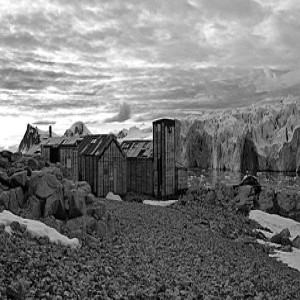
In a continent recognized as a global commons, yet where seven states hold frozen claims and others are eager to be seen as stakeholders, history and the cultural heritage remains of earlier expeditions to Antarctica are deeply entangled in the geopolitics of the southern polar region. On this episode, Polar Geopolitics speaks with three polar historians and cultural heritage experts—Dag Avango, Lize-Marie van der Watt and Peder Roberts—who explain these complex interlinkages that strongly influence contemporary activity and the governance of Antarctica. The evolution and importance of the Antarctic humanities is also discussed in the wake of major conference on the subject in Ushuaia, Argentina.
Apr 30, 2019
Apr 30, 2019
16 min
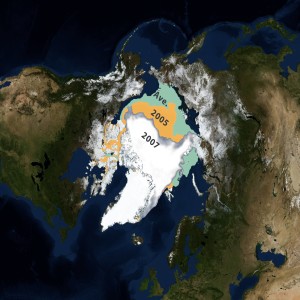
A confluence of events in 2007 made the media take major interest in the Arctic, and the geopolitical narrative that emerged that year continues to shape public and political perceptions on the opportunities and risks the region and the world faces in the wake of accelerated climate change. This episode features three experts—Alice Rogoff, founder of Arctic Today; technology historian Nina Wormbs; and media studies professor Miya Christensen—that share their insights on the Arctic media landscape and events like the 2007 Arctic sea ice minimum that drive coverage and underpin narratives of geopolitical conflict and competition over Arctic resources.