A podcast on the Arctic and Antarctica that applies the lens of geopolitics to analyze a wide range of critical issues pertaining to the polar regions and international affairs. In interviews with leading experts, recurring topics include Greenland, the Arctic Council, climate change, critical raw materials, the Antarctic Treaty System, hybrid warfare, science diplomacy, great power competition between the United States, China and Russia, sustainable development, Svalbard, NATO, Arctic shipping, Alaska, AI, technology and critical infrastructure, the Baltic Sea, military and national security, energy, the role of indigenous peoples in Arctic governance, and more. Polar Geopolitics is hosted by Dr. Eric Paglia, a podcast producer and environmental historian at KTH Royal Institute of Technology in Stockholm, Sweden.
Episodes
Mar 20, 2019
Mar 20, 2019
22 min
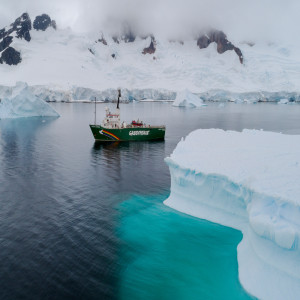
Many stakeholders, particularly environmental NGOs, involved with last October's meeting of the Commission for the Conservation of Antarctic Marine Living Resources were highly critical of the Commission's failure to reach agreement on additional Marine Protected Areas in the Southern Ocean around Antarctica. Frida Bengtsson is global Project Lead for the Greenpeace 'Protect the Antarctic' campaign, and participated in the meeting in Hobart, Australia on behalf of the Antarctic and Southern Ocean Coalition. On this episode of the podcast, she shares her experiences and insights from an NGO perspective on working with, and sometimes against, state and commercial interests in safeguarding both polar regions from excessive exploitation. In addition to the CCAMLR negotiations for MPAs in the Weddell Sea and East Antarctica, Frida also discusses Greenpeace's work with Southern Ocean krill fisheries, the problem of microplastics, and other environmental issues pertaining to the polar regions.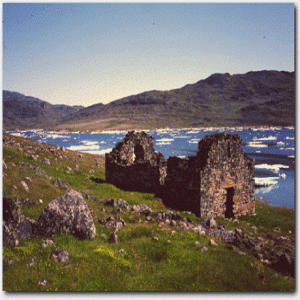
Feb 18, 2019
Feb 18, 2019
11 min
What lessons for contemporary climate adaptation can we learn from the Viking-era Norse settlement on Greenland, which was founded in the midst of the Mediaeval Warm Period and disappeared during the Little Ice Age? Prof. Thomas McGovern, an environmental archaeologist and world leading authority on Medieval Arctic cultures, shares his insights from decades of fieldwork in the North Atlantic into how historic societies succeeded or failed to adapt to a changing climate and shifting socio-economic circumstances, and how this may inform the present period of environmental change and geopolitical interest in the region.
Feb 6, 2019
Feb 6, 2019
15 min
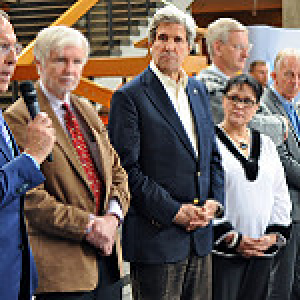
In part two of the interview with Polar Geopolitics, Dr. Annika Nilsson shares her insights into the history and inner-workings of the Arctic Council, including its role in promoting peace, enhancing environmental knowledge, and facilitating science diplomacy among member states and non-Arctic observers to the Council. She also considers contrasting portrayals of the Arctic as a region of peaceful cooperation versus media narratives of looming conflict.

Jan 21, 2019
Jan 21, 2019
12 min
Earth system science studies the planet as an array of interacting “spheres” that represent components of a single system. Antarctica dominates the cryosphere—the frozen parts of the planet consisting of ice and snow—and thus has a major influence on the overall functioning of the Earth system. Joining the podcast is Prof. Will Steffen, a world leading Earth system scientist and public intellectual who has long operated at the interface of science and policy, including as chairman of the Antarctic Science Advisory Committee in Australia. He is also closely associated with concepts such as the Anthropocene, the Great Acceleration, and the Planetary Boundaries framework. In addition to explaining the centrality of Antarctica in the Earth system, Prof. Steffen discusses the idea of “Hothouse Earth”, evoked in an article published in Proceedings of the National Academy of Sciences USA, which received a great deal of international media attention.
Dec 12, 2018
Dec 12, 2018
21 min
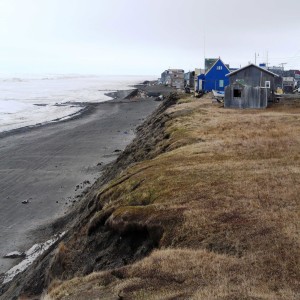
Indigenous communities are facing multiple challenges from a changing climate across the circumpolar North. In this episode, two experts with extensive experience in the American Arctic —former senior Interior Department official Joel Clement and Nicole Misarti of University of Alaska—discuss with Polar Geopolitics the array of impacts affecting native Alaskan communities, and what measures are being taken to build resilience and adapt to climate change.
Nov 21, 2018
Nov 21, 2018
23 min
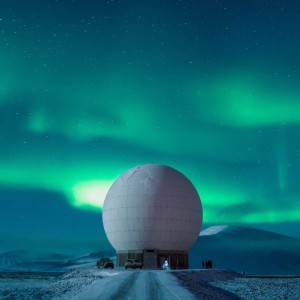
What parallels exist in governance regimes for Outer Space and the Arctic? On this episode, Prof. Michael Byers, a leading Arctic and international law expert, shares his insights into why extreme environments often foster international cooperation. He also explains the complexities of Canadian Arctic politics, and the nuances of the concept of sovereignty, in a far-ranging discussion that encompasses outer space, the deep sea, and both polar regions.
(Image: Reuben Wu)
Nov 7, 2018
Nov 7, 2018
14 min
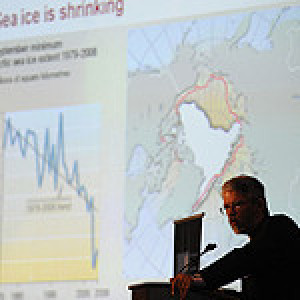
Prof. John P. Holdren is a leader of the Arctic Initiative at the Belfer Center at Harvard’s Kennedy School of Government. The former Chief Scientific Advisor to President Barack Obama attended the 2018 Arctic Circle Assembly in Reykjavik, Iceland, where he sat down with the Polar Geopolitics podcast to explain the impacts of climate change on the Arctic and how this in turn affects the global environment. Prof. Holdren also discusses the importance of international scientific cooperation in the Arctic, reflects on scientific advice for political leaders, and critiques current U.S. engagement with climate change and the Arctic, while identifying signs of hope on the sub-national level.
(Photo: Seth Johnson USCG)
Nov 1, 2018
Nov 1, 2018
21 min
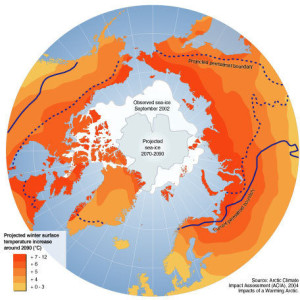
Despite the Arctic Council’s core mission of promoting sustainable development and environmental protection, it has to date done little to actually combat climate change. According to Dr. Annika Nilsson — an expert on Arctic politics at the Stockholm Environment Institute — this ambivalence towards climate mitigation constitutes one dimension of what she calls the “Arctic Paradox”. In the first part of her interview with the Polar Geopolitics podcast, Dr. Nilsson provides historical context and current perspective on the environment and energy-related aspects of the paradox in Arctic politics.

(Image: Riccardo Pravettoni)